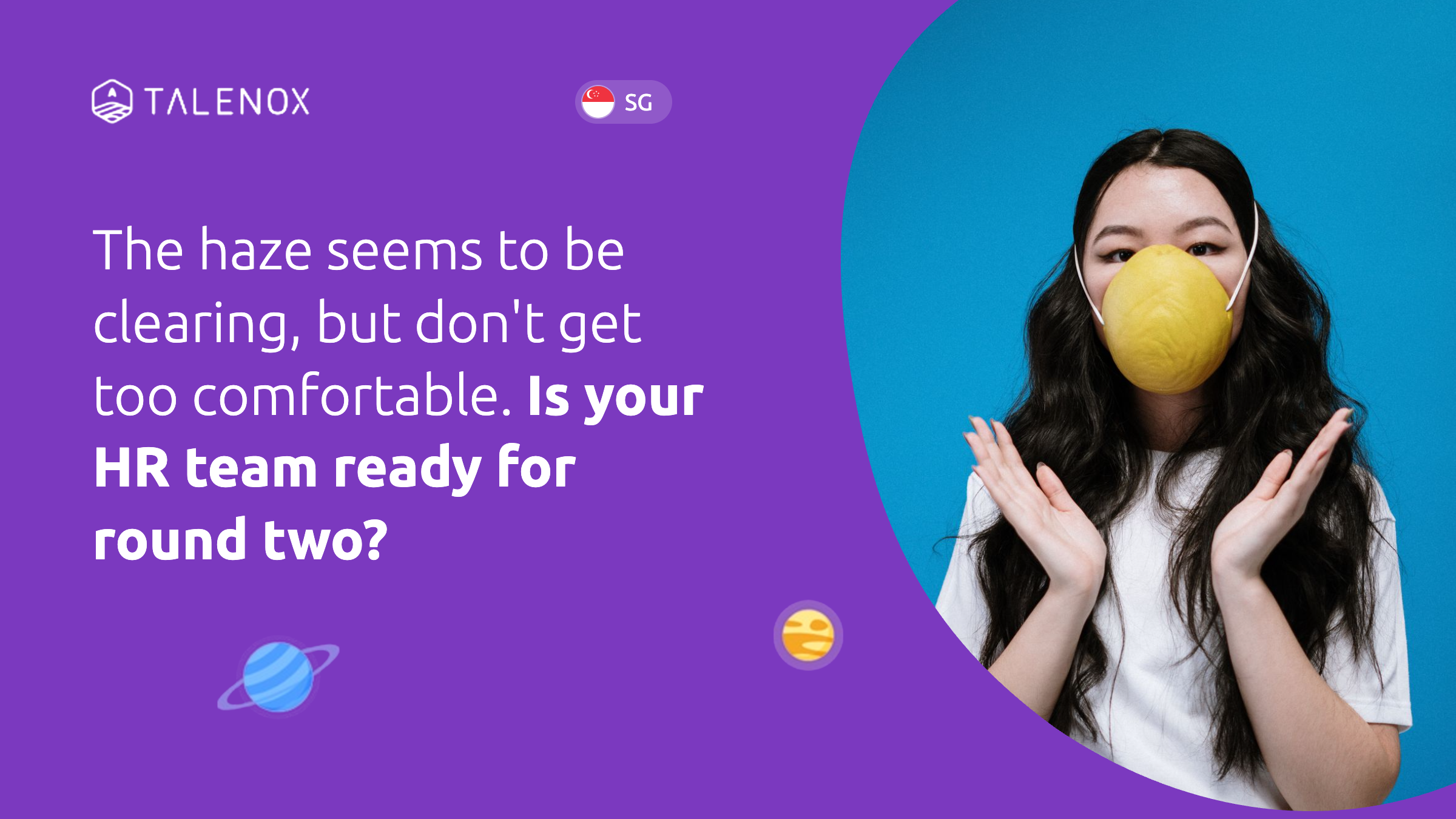
The Haze Is Back (And It Might Stick Around): What Singapore Employers Should Sort Out This Week
October 22, 2026 · 7 min read
Dear fellow business owners and HR folks: if your office has started smelling faintly like someone left the satay on the grill too long, you’re not imagining it. Last week, a colleague mentioned visibility at our office (it’s air-conditioned and indoors) was poor. So yes, we understand.
You’ve probably seen the Instagram stories by now. There was one where the Marina Bay skyline looking like someone turned the contrast all the way down. Our group chat mentioned the words “post-apocalyptic world”, and our boss reminded everyone that there were N95s from 2020 lying around (we’re not sure if it’s still safe to use – that boss also eats expired food).
Here’s where things stand. On the afternoon of 16 October, the 24-hour PSI in the central region hit 229, the worst reading Singapore has seen this year. By then we’d clocked 12 straight days in the unhealthy range, the longest run since 2015. Some weekend showers helped, and NEA’s forecast for 20 October eased to 90-160. Today, it looks pretty clear. We can see the skyline and some joggers resuming their outdoor runs.
But I wouldn’t pack the masks away just yet.
On the same day the PSI peaked, Minister Grace Fu warned that readings could cross into the hazardous range (above 300) in the coming weeks. She also said the haze could hang around for another three to four weeks, until the inter-monsoon period at the end of October or early November. Proper relief might only arrive with the northeast monsoon in December.
So this isn’t a one-weekend thing. If you’ve been handling haze questions on the fly, this week is a good time to get properly organised.
Why This Is an HR Problem, Not Just a Weather Problem
It’s tempting to treat haze as a facilities issue. Shut the windows, switch on the air purifier, and you’re done.
Ask anyone who did HR in 2015, though. The purifier was the easy bit. The hard bit was the never-ending questions. Who gets to WFH? What if someone’s asthma acts up and they’ve got zero MC left? If we shut the warehouse, do we still pay people?
(Yes. Yes you do. More on that later.)
And MOM is clear: keeping your people safe at work is your job. Drop the ball and you could be looking at stop-work orders or fines under the WSH Act. Not an email you want to forward to your boss.
What MOM Actually Expects
MOM, SNEF and NTUC put out a tripartite advisory on haze, and MOM has its own set of guidelines for employers. We’ve read through all of them so you don’t have to. Here’s the short version (you’re very welcome).
Outdoor work: The higher the PSI, the less time your team should spend sweating it out under an orange sky. Rotate people around, let machines do the heavy lifting, and keep the water and indoor breaks coming. That non-urgent outdoor job? It can wait till the sky is blue again.
Masks: If someone has to be outside, the masks are on you – proper ones that fit, plus a quick how-to if needed. Breathing through an N95 is basically a workout on its own, so slow things down and give more breaks. Anyone getting headaches or feeling breathless gets moved indoors. No heroes, please.
Flexible work: Let people work from home or shift their hours, especially colleagues who are more vulnerable or have kids and parents at home to look after. (P.S. Talenox is remote-first, so we’re pretty used to this one. =) )
Leave: Someone’s run out of annual or sick leave? Lend them some (advance leave) instead of docking their pay. Nobody chose to breathe smoke.
Closures: The one people get wrong. If you decide to close for a day or two, that’s your call – and your bill. No pay cuts, no sneakily deducting annual leave. Closing for longer? Sit down with your team (and union, if you have one) and agree on leave and pay together.
Communication: Give people an easy way to say “the haze is getting to me” without feeling dramatic, and have a plan for when someone disagrees with how things are being handled.
6 Things to Set Up Before the PSI Spikes Again
1. Give haze its own leave type
What to do: Instead of letting haze-related absences disappear into annual leave or MC, perhaps you could create a separate leave type for them. That’s a pretty cool HR benefit, if you ask us.
Example: “Haze – Advance Leave” for employees who’ve exhausted their entitlements, and “Haze – Company Closure (Paid)” for days you shut the office.
Why it works: When this episode is finally over, you’ll know exactly how many days it cost the business. And nobody’s annual leave balance gets eaten up without them noticing, which is the kind of thing that turns into an awkward conversation in December when everyone wants to go on holiday.
Talenox’s tip: You can set up custom leave types in Talenox, so haze-related days are tracked separately from regular annual and sick leave. Your employees can see their balances on the app without having to ask HR.
2. Put a number on your WFH rule
What to do: Decide ahead of time which PSI level will change how your team works, and put it in writing so nobody has to guess. NEA releases its 24-hour PSI forecast every evening, which makes it handy for planning the next day. The 1-hour PM2.5 reading is better for in-the-moment calls, like whether that afternoon site visit really needs to happen today.
Example: “If tomorrow’s forecast is Very Unhealthy (201 and above), colleagues who are pregnant, have heart or lung conditions, or are looking after young kids or elderly parents can work from home without needing to ask. If it reaches Hazardous, everyone whose job can be done remotely stays home.” One of our bosses actually said “If PSI hits >300, everyone please stay home unless you want to become a mutant”. (An X-men reference – which most of us actually understood, so it’s pretty funny).
Why it works: It saves everyone from the late-night WhatsApp back-and-forth about whether tomorrow is “bad enough”. Employees don’t feel like they’re asking for a special favour, and HR or managers don’t end up making a different call for every person – which is usually how quiet resentment starts.
Talenox’s tip: Once the policy is set, announce it properly and pin it somewhere your team actually checks, whether that’s a Slack channel or the team WhatsApp group. When the sky turns orange, nobody is going to scroll through three weeks of emails to find it.
3. Hands off payroll on closure days
What to do: If you decide to close the office for a day or two because the air is too bad, pay everyone as you normally would. It might feel like paying for a day of no work, but think of it as one of those costs that comes with running a business in haze season.
Why it works: For starters, it’s what MOM’s advisory asks employers to do. But beyond ticking the compliance box, it says a lot about how you treat your people when things get uncomfortable. Employees tend to remember that long after the sky clears, and they’ll happily tell their friends about it – for better or worse.
Talenox’s tip: If you run payroll on Talenox, record closure days under a paid leave type instead of leaving them as unexplained gaps. Your payslips stay accurate, and if anyone has questions later, you’ll have a clear record of exactly what happened and when.
4. Spread the word on the Haze Subsidy Scheme
What to do: Since 12 October, MOH’s Haze Subsidy Scheme has been running at participating Public Health Preparedness Clinics and all polyclinics. Eligible Singaporeans pay S$10 max to treat the usual haze suspects – asthma, bronchitis, allergic rhinitis (aka the never-ending sniffles), conjunctivitis and URTIs. Pioneer and Merdeka Generation seniors pay S$5 max, and Public Assistance cardholders pay nothing.
Who’s eligible: Kids 18 and under, seniors 65 and up, and those on PA, PG, MG, MFEC or CHAS (blue and orange cards only). Probably not most of your staff – but very possibly their kids and parents.
Why it works: Nobody goes looking for this stuff on their own. A two-line message in the team chat costs you nothing, and people genuinely appreciate it.
Talenox’s tip: While you’re at it, make sure your medical claims policy covers haze-related GP visits. Staff can snap and submit receipts through Talenox Claims, so you’re not chasing crumpled receipts around the office.
5. Know when it’s a WICA thing
What to do: If someone falls sick from haze exposure while working (usually your outdoor crew), they may be able to claim under the Work Injury Compensation Act. Report it through MOM’s WSH Incident Reporting.
Why it works: Sort it early and you skip the headache later. If they recover fully, you cover their medical leave wages and medical bills directly.
Talenox’s tip: Keep MCs and claims tied to the right employee record from day one. Future you will thank you when MOM comes asking.
6. Actually check in on people
What to do: Drop a message to the folks most likely to be struggling. The pregnant teammate. The one who casually mentioned their asthma at last month’s team lunch.
Example: “Hey Priya, how are you holding up with the haze? If tomorrow looks bad, just work from home – no need to ask.”
Why it works: MOM wants you to know who’s more vulnerable. But no guideline will tell you your quietest colleague has been sneaking inhaler puffs in the toilet. Only asking will.
Talenox’s tip: Don’t forget your outdoor and shift workers. They usually have it the worst and complain the least.
Make Haze Season a Little Less Chaotic for HR
If half of this list sounds like a lot of spreadsheet juggling, that’s where we come in. With Talenox, you can set up custom leave types for haze days and have approved leave flow straight into payroll, so the next time the PSI spikes, HR isn’t the one left gasping for air.
Book a free Talenox demo and our team will walk you through how it all works in about 20-30 minutes. It’s fully online, so no need to brave the haze to see it.
A Quick Note for Employees Reading This
If you’re on the other side of this and worried your workplace isn’t taking the haze seriously, here’s what’s worth knowing.
Start by raising it with your supervisor, HR or union rep. If nothing changes after that, you can call MOM at 6438 5122 or send in feedback online, especially if you’re being asked to do strenuous outdoor work while the air is bad.
If your company closes for a short period because of the haze, your pay and leave shouldn’t be touched. That’s MOM’s position, not just ours.
Delivery riders can also pick up free N95 masks and take a breather at rest stops set up in 30 bus interchanges. And if home is starting to feel like a smokehouse, community clubs and RC centres have opened haze shelters, with hours extended till 10pm if the PSI goes into the hazardous range.
Also, like our parents like to say – drink some water. Seriously. You’re probably not drinking enough.



 Singapore
 Hong Kong
 Malaysia
 Global